


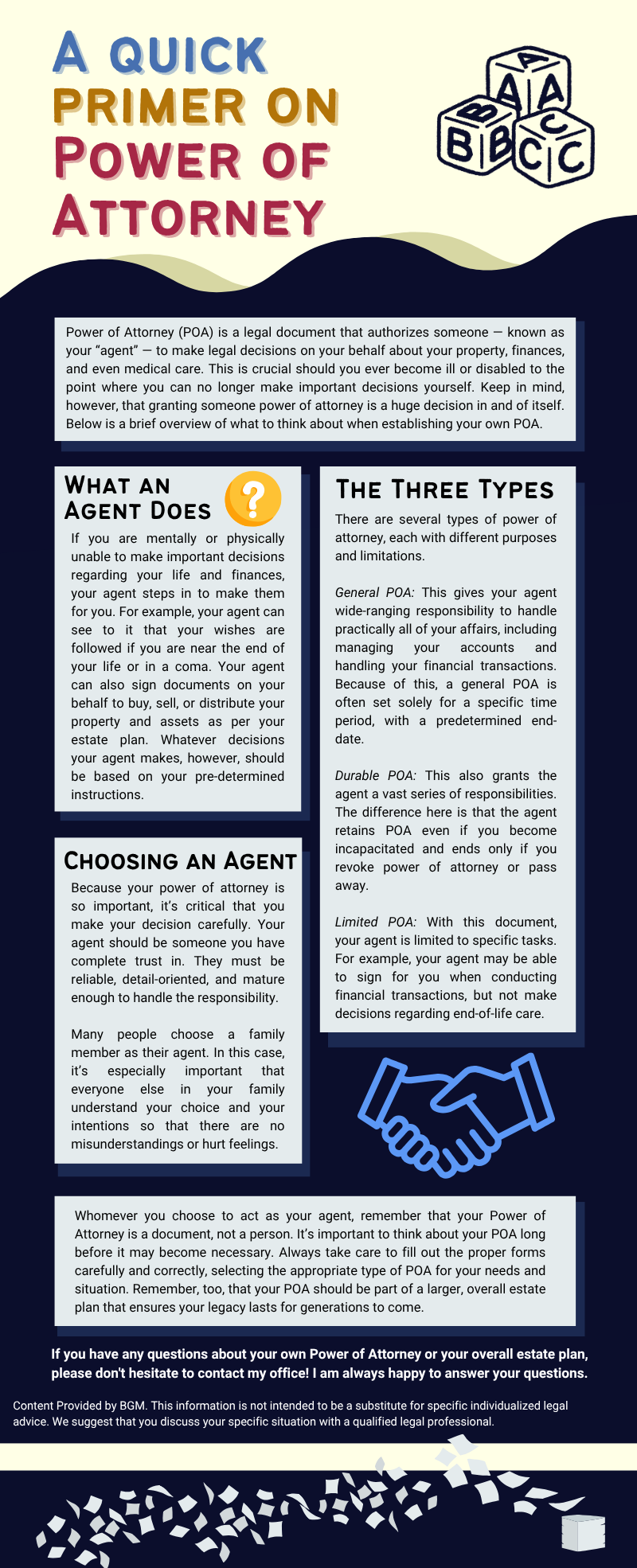
When it comes to planning for the unexpected, establishing a Power of Attorney (POA) is a critical piece of the puzzle. Whether it's managing finances, making healthcare decisions, or handling property matters, a POA allows someone you trust to step in and act on your behalf if you're ever unable to do so yourself.
What Is a Power of Attorney?
A Power of Attorney is a legal document that authorizes a trusted individual — your “agent” — to make decisions on your behalf. This can include managing your finances, handling property transactions, or even making healthcare choices, depending on the type of POA you establish.
While it’s not always easy to think about becoming incapacitated, planning ahead ensures your wishes are followed and your affairs are in good hands.
What Does an Agent Do?
If you're mentally or physically unable to make decisions, your agent can take the reins. This might include:
Ensuring your end-of-life wishes are honored
Handling the sale or distribution of assets as outlined in your estate plan
Managing your accounts or signing legal documents
It’s important to remember that your agent must act according to the instructions and limits you’ve set.
Understanding the Types of POA
There’s no one-size-fits-all when it comes to Power of Attorney. Here are the three main types:
General POA – Grants broad authority to manage nearly all aspects of your financial and legal life. Usually used for a set time period.
Durable POA – Similar to a general POA, but remains effective even if you become incapacitated.
Limited POA – Assigns your agent to specific tasks, such as signing documents for a real estate closing, but does not include broader authority.
Choosing the Right Agent
Picking an agent is no small decision. You need someone trustworthy, responsible, and able to carry out your wishes without hesitation. Many people select a family member, but what matters most is that your agent fully understands your intentions — and that your loved ones are on the same page to avoid future misunderstandings.
POA as Part of Your Estate Plan
A Power of Attorney is more than a single document — it's an essential piece of your overall estate planning. It’s wise to complete it well before you think you'll need it. Be sure to select the right type of POA for your specific needs and work with a qualified professional to make sure everything is done properly.
Need guidance on setting up a Power of Attorney or looking at your broader estate plan?
Don’t hesitate to reach out. We’re here to help you think through your options and make choices that support your long-term goals.
Disclaimer: This blog is for informational purposes only and is not a substitute for legal advice. Please consult a qualified legal professional for guidance based on your specific situation.