


Kids learn so much in school — geology, math, history, the arts. But here’s something that often gets left out: financial skills.
That gap? It usually falls to us — parents, grandparents, and advisors — to fill it. And honestly, that’s not a bad thing. Teaching your kids about money is one of the most meaningful gifts you can give them.
At Pantheon Wealth Planning, we believe financial education starts at home. So we put together this simple guide to help you know what to teach — and when.
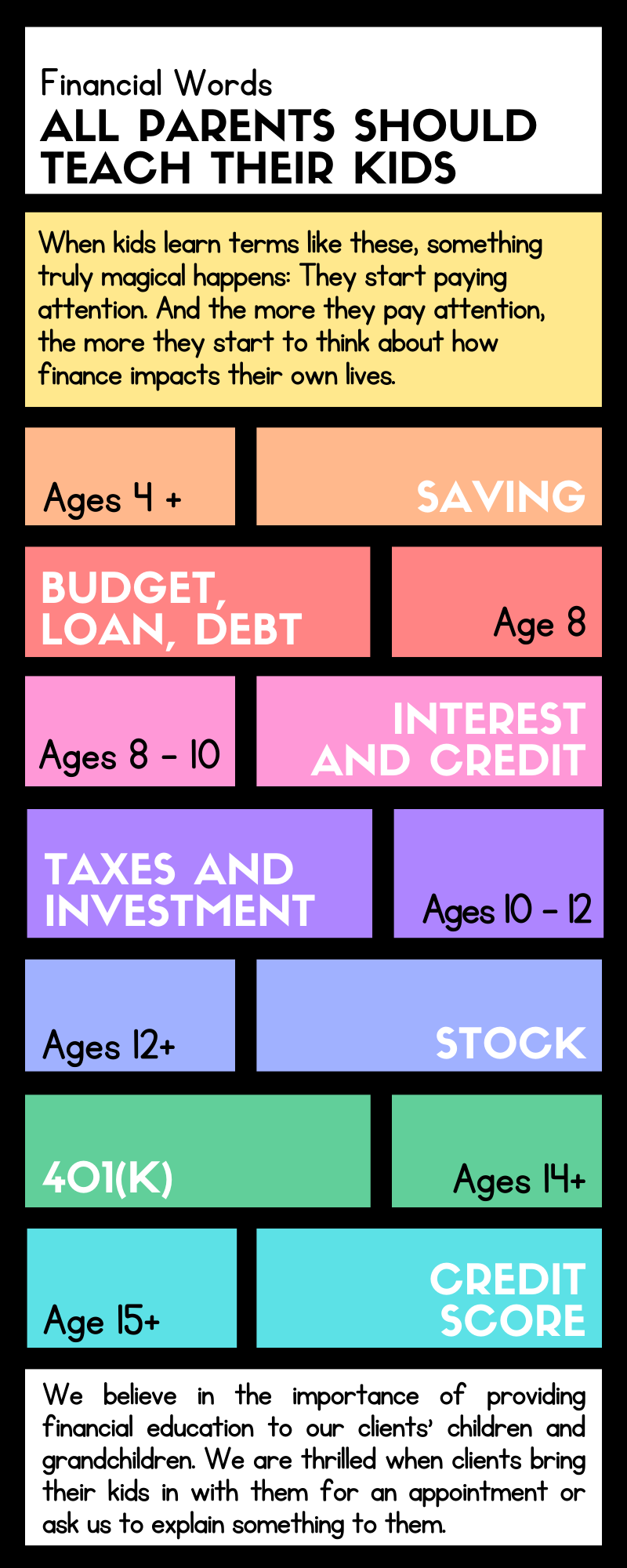
Ages 4+: Start with Saving
Yes, even a four-year-old can understand saving! Start simple: when kids get birthday money or an allowance, talk about setting some aside for later. A piggy bank works great at this age. The concept of “wait and save” builds a habit that will last a lifetime.
Age 8: Budget, Loan, and Debt
Around age eight, kids can start to grasp bigger ideas. A budget is simply a plan for your money — how much comes in and where it goes. A loan is when you borrow money that you promise to pay back. And debt is what you owe when you’ve borrowed. Keep the conversations light and real. “If you borrow a dollar from me, you owe me a dollar back” is the perfect starting point.
Ages 8–10: Interest and Credit
This is where things get a little more interesting. Interest is the cost of borrowing money — or the reward for saving it. Credit is trust: it’s what lets you borrow money based on your history of paying it back. A fun way to explain interest? Tell them that if they leave $10 in a savings account, the bank will pay them a little extra just for keeping it there.
Ages 10–12: Taxes and Investment
Once kids are in middle school, they’re ready to learn that not all the money you earn is yours to keep. Taxes are the portion that goes to the government to fund things like roads, schools, and hospitals. And investments? That’s putting your money to work so it can grow over time — whether through stocks, real estate, or a business. The earlier kids understand this, the better.
Ages 12+: Stocks
A stock is a small piece of ownership in a company. When a company does well, the value of that piece goes up. When it struggles, it can go down. This is a great age to help kids follow a company they love — maybe a favorite tech brand or sports team — and watch how its stock moves. It makes the concept real and exciting.
Ages 14+: The 401(k)
This one’s all about the future. A 401(k) is a retirement savings account that many employers offer. Money goes in before taxes are taken out, which means it grows faster. Some employers even match what you put in — that’s free money! High schoolers who understand this early are way ahead of the game when they land their first real job.
Ages 15+: Credit Score
A credit score is like a financial report card. It shows lenders how responsibly you’ve managed money in the past. A good score can mean lower interest rates on loans, better apartment options, and even job opportunities. Teens who understand this are far less likely to make costly mistakes with their first credit card.
The Magic That Happens When Kids Learn This Stuff
Here’s what we’ve seen time and again: when kids learn terms like these, something magical happens. They start paying attention. They start connecting the dots between money and their own lives. They start asking questions.
And that’s exactly where financial confidence is born.
At Pantheon Wealth Planning, we love when our clients bring their kids along to appointments. Whether it’s a quick explanation of what a 401(k) is or a bigger conversation about building wealth, we’re here for all of it. Because helping your family thrive — now and for generations to come — is exactly what we’re here to do.
Want to talk about how to set your family up for financial success? We’d love to have that conversation.
Reach out to us today — we’re always happy to help.
This information was created to provide accurate and reliable information on the subjects covered but should not be regarded as a complete analysis of these subjects. It is not intended to provide specific legal, tax or other professional advice. The services of an appropriate professional should be sought regarding your individual situation.
Sheri Pan is a registered representative with and securities and advisory services offered through LPL Financial a registered investment advisor, Member FINRA/SIPC.